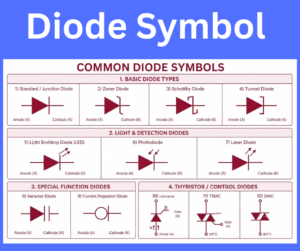
Diode Symbol: Meaning, Types, Polarity and Circuit Examples
A diode symbol is a graphical representation used in electrical and electronic circuit diagrams to show the presence, orientation, and function of a diode. Since
A diode symbol is a graphical representation used in electrical and electronic circuit diagrams to show the presence, orientation, and function of a diode. Since
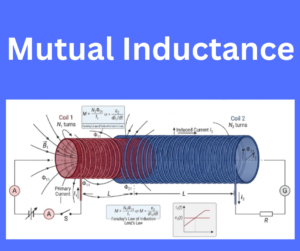
Mutual inductance is the phenomenon in which a changing current in one coil produces a varying magnetic field that links with a nearby coil, inducing
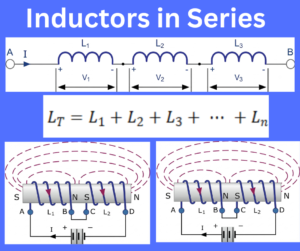
Inductors can be connected in series by connecting them end to end in a single electrical path. In this configuration, the same current flows through
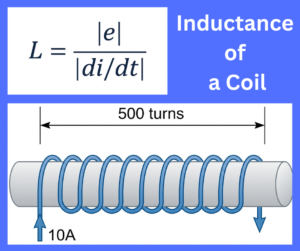
Inductance of a coil is the property by which it opposes changes in the current flowing through it by inducing a voltage. When the current
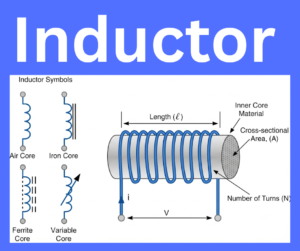
An inductor is a passive electrical component made from a coil of wire that stores energy in the form of a magnetic field when current
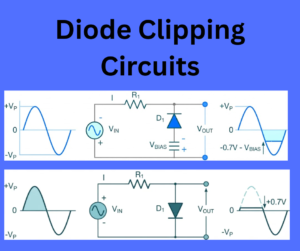
A diode clipper, also called a diode limiter, is a wave-shaping circuit that modifies an input signal by removing or limiting portions of its amplitude.
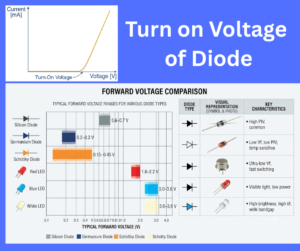
Turn-on voltage of a diode refers to the forward voltage VFV_F at which a diode begins to conduct appreciable current when forward-biased. It describes the
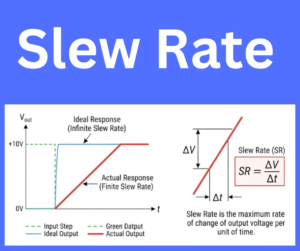
The slew rate indicates how rapidly an output voltage can change in response to a varying input signal. It is an important parameter for determining
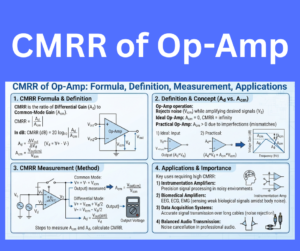
The Common-Mode Rejection Ratio (CMRR) of an op-amp is an important parameter that describes how effectively an operational amplifier rejects signals that appear simultaneously at
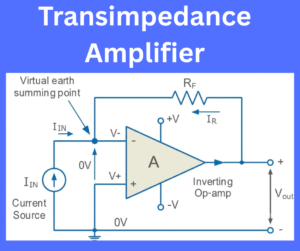
A Transimpedance Amplifier (TIA) is an operational amplifier-based circuit that converts a small input current into a corresponding output voltage. Its voltage gain, expressed as