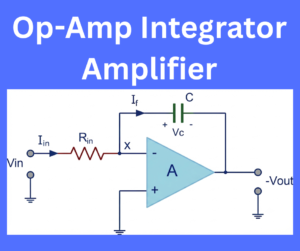
Op-Amp Integrator Amplifier: Formula, Working & Applications
The Op-Amp Integrator Amplifier is an important analog circuit used in signal processing and waveform generation. It provides a useful way to process time-varying input
The Op-Amp Integrator Amplifier is an important analog circuit used in signal processing and waveform generation. It provides a useful way to process time-varying input
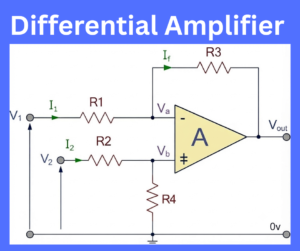
A differential amplifier is an important building block in op-amp circuits and many analog electronic systems. It is widely used where two input signals need
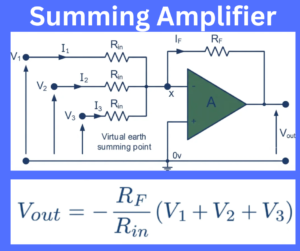
A summing amplifier is an op-amp circuit based on the inverting amplifier configuration. It combines two or more input signals into a single output voltage,
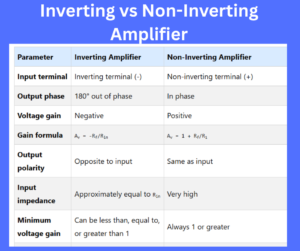
The main difference between an inverting vs non-inverting amplifier is the phase relationship between the input and output signals. An inverting amplifier produces an amplified
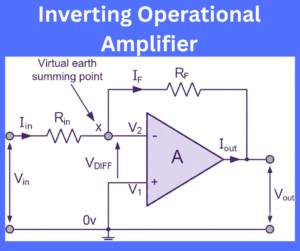
The inverting operational amplifier is one of the simplest and most widely used op-amp configurations. It produces an output voltage that is opposite in polarity
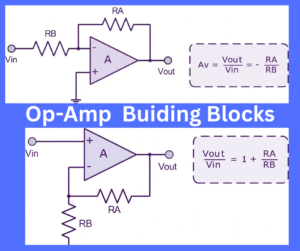
Op-Amp Building Blocks are fundamental components of analog electronic circuits. These op-amp building blocks can be configured in different ways to create a wide range
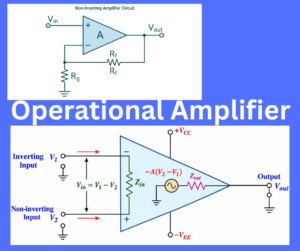
Operational amplifier (op-amp) is an electronic device with two input terminals and a single output terminal. It is a fundamental building block of analog circuits,
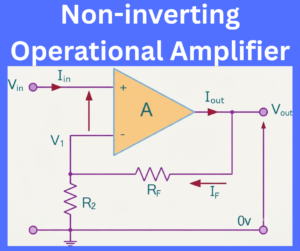
A Non-inverting Operational Amplifier is an op-amp configuration in which the input signal is applied to the non-inverting (+) terminal. The circuit produces an amplified
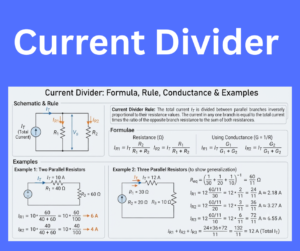
A current divider circuit consists of two or more parallel branches that provide multiple paths for electric current to flow. In a parallel circuit, the
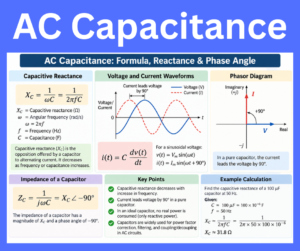
AC Capacitance describes the behaviour of a capacitor in an alternating current (AC) circuit, where it continuously charges and discharges as the supply voltage changes.